

The Movie: Dances with Wolves, is an American tale that tells of an American soldier named Lieutenant John J Dunbar that goes to the western frontier in order to see what it is like before it disappears forever. Set in the midst of the American Civil War, taking place in South Dakota, it focuses on the view of an area of land that will eventually fall to western expansion by the war’s end. This film provides us with a major view of what the American landscape was like before the time expansion tool place that changed it in order for the settlers to make a living for themselves and the U.S. government began extracting the resources from the land. The movie also represents the views of the land to the Native American tribe that inhabits the land, the Sioux tribe, and what it also represents to them. We will review the Landscape side of the film and how the land is so important to the Sioux and how what they ended up going through outside of the movie.
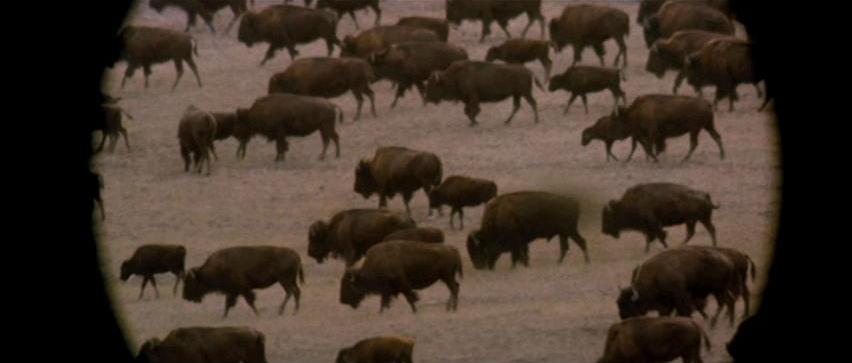
When the movie introduces us to the landscape that is the main setting, we are shown open grasslands that lie on plains of hills as far as the eye can see. This area of land was once home to millions of buffalo in which the Sioux and other Native American Tribe have hunted for food and have used for cultural purposes, such as clothing and create tools to survive with. Unfortunately, By the end of the 1800’s, their numbers were reduced to a few hundred and they almost went extinct. However, with conversation efforts to bring them back, the buffalo are returning to roam the open fields of North America with a couple thousand today. The Buffalo is still a significant animal to the Native American culture and will continue to do so as long as Native American’s stay true to what they believe in and hold on to their culture for generations to come.
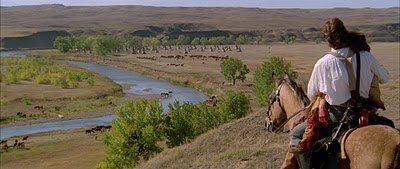
The landscape itself is viewed by many as vital to many people, both settlers and Natives alike. To the settlers and officials of the U.S. government, the land is a chance to expand territory, a place to settle upon to gain a new life and a source for resources to provide welfare for the country. However, to the Native Americans, the land is sacred to them, and is something they are willing to fight for. They have lived off of the land for generations and will protect it if it was threatened. In the film, we see this when the a rival tribe threatens to take the land from the Sioux and they defend it from being taken by this tribe with the help of Dunbar, whom by now has switched sides and now becomes one of them, gaining the name Dances with Wolves.
Towards the End of the film, however, the military from the U.S. comes along with the intent to destroy the Sioux way of life and put them in to their modern society. The Sioux, along with the main character run from them to hide with the movie ending with a note of an uncertain but likely dark future where the Sioux Indian way of life is no more.

The film is a fiction of course, however it provides us an insight of how much the Native American way of life connects to the landscape itself and shows a prelude to a fight with Western settlers form the U.S. who wished to take the land for resources, bring society and religion to the land and settle into it to have a new life in the frontier. This came to be known a manifest destiny, the belief in the middle of the 19th century that the United States had a special mission to expand westward. Many people believed that it was inevitable for the U.S. to expand across the continent and reach all the way to the Pacific Ocean; and the Natives were to be adapted to the customs and way of life in the U.S. and be placed on reservations that marked were they were to live on and stay away from the settlers as they settle on land that once belonged to them.
:max_bytes(150000):strip_icc()/American-Progress-painting-Gast-3000-3x2gty-5685a13e5f9b586a9e1e3eb0.jpg)
This lead the Natives to fight for their land and protect what is theirs in what came to be known as the American-Indian War. Despite having won many victories over the U.S. Army, the Natives lost and were eventually forced on to the reservations with no hope of getting their land back. Over the years, however, they kept on fighting for their land in spite of all the hardships they have to go through with the government having to take more of their land and making their reservations even smaller than before. Even today, they are still fighting for their land in protest to the government long even after the American-Indian War came to an end; especially when it came for the recent Dakota Oil Pipeline.

The Natives have spent years fighting against this pipeline that threatened to take more of their sacred land all together, and they were not alone. People form all over the world, including environmentalists, nearby residence and even veterans all came together and joined the Natives to fight this Pipeline and keep it from being built in sacred land that could threaten to damage the Missouri River and nearby water supplies that give off clean drinking water in the event of an oil spill that could severely damage the ecosystem and environment of the central United States. Unfortunately, after so much political pressure and protesting, the Pipeline was never the less approved for construction and is now currently in full operation to this day.
There is simply a lot of information to cover on this topic that cannot all be described in just one topic. For those who wish to know more detailed information on this topic and know the historical content on the film, then they should take a look at this historical film critic’s review of the film, which is a bit outdated, but goes into greater detail of the film and the events that have been discussed from above. The link to this review can be found below:
https://www.youtube.com/watch?v=d732rPkjqOU
What does all of this have to do with the film? Because Dances with Wolves shows us just how much the land means to the Native American and how much it connects them to their way of life; and after all of these years, decades after the American-Indian War, they are still fighting for the land they have once roamed about freely before western expansion took it from them and defend their way of life from being destroyed for ever. It is amazing to see what these people go through and how they are still fighting for their land to this day. It is this particular reason why we should recognize the struggles the Native Americans go through, because of how they could stand up for something they know is truly right and their will to defend what has been theirs for generation. This is exactly why they are still considered, as they have always have been since the 1800’s, the true warriors of the land.
Sources Used:
https://mashable.com/2016/08/24/north-dakota-access-pipeline-protest/#TNRIvFIeSEqr
https://www.thoughtco.com/what-is-manifest-destiny-1773604
https://www.moviehousememories.com/dances-with-wolves-1990-movie-summary/
https://www.radiotimes.com/film/mm5ch/dances-with-wolves/
https://www.animalfactsencyclopedia.com/Buffalo-facts.html
http://allreaders.com/movie-review-summary/dances-with-wolves-3612
http://www.movie-locations.com/movies/d/Dances-With-Wolves.php


 Crushers Landscapes